
OCS Amsterdam supports UNICEF Plastic Bricks in Côte d’Ivoire
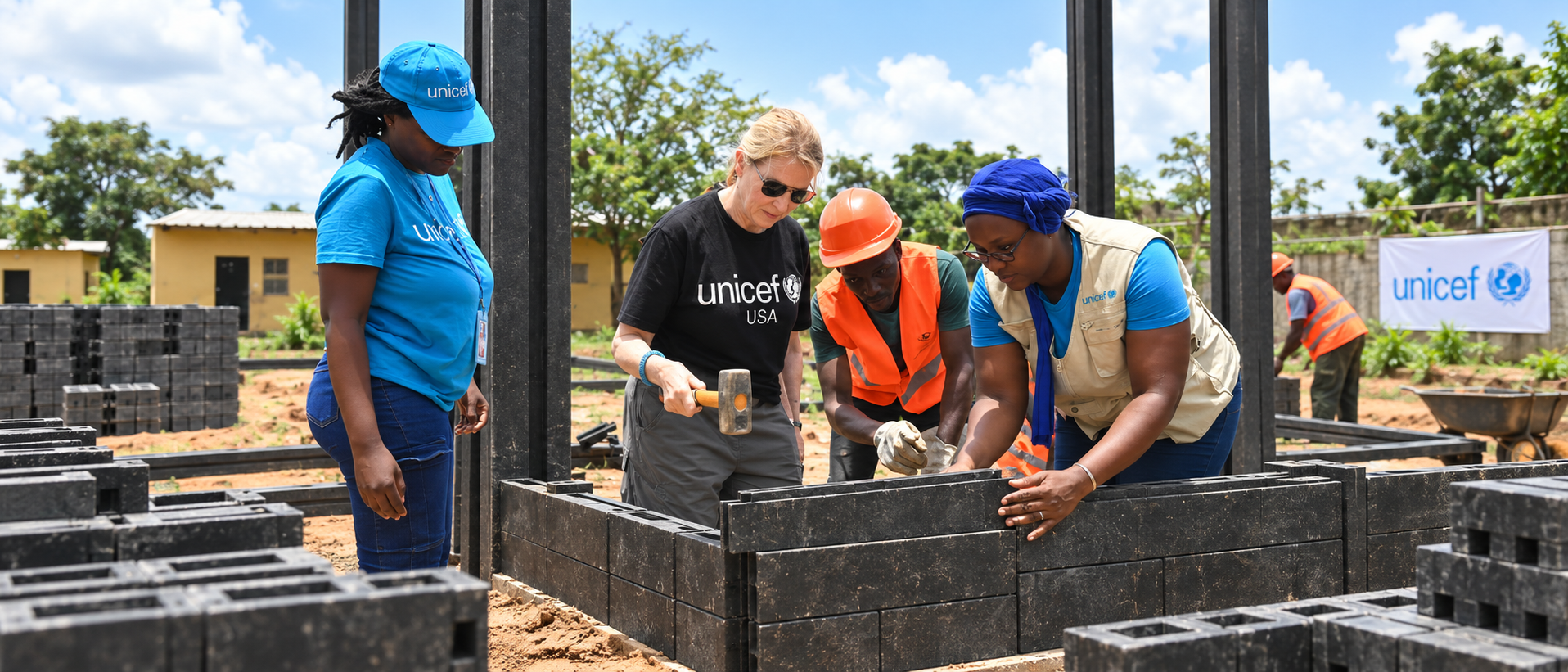
OCS Amsterdam supports UNICEF Plastic Bricks in Côte d’Ivoire
OCS Amsterdam has been a UNICEF Business Buddie for several years. Through this partnership, we support the Plastic Bricks programme in Côte d’Ivoire, where plastic waste is processed into bricks used to build new classrooms.
From plastic waste to classrooms
Côte d’Ivoire faces both large amounts of plastic waste and a shortage of classrooms. Through the Plastic Bricks programme, UNICEF addresses these two challenges together.
Plastic waste is collected locally and processed into plastic bricks. These bricks are used to build new classrooms, giving plastic waste a new purpose while helping more children gain access to education.
Impact beyond construction
The programme focuses not only on plastic waste and education. UNICEF also supports women involved in the collection and processing of plastic. They receive training in areas including collecting, safely storing and processing plastic waste, as well as entrepreneurship.
UNICEF also invests in the quality of education, including by training teachers and providing schools with basic facilities such as clean water and toilets.
Results of the Plastic Bricks programme
Since the programme began in 2019, 516 classrooms have been built using recycled plastic. As a result, more than 25,000 children now have a dedicated place to learn.
Nearly 300 women have also been trained in plastic waste collection and processing and entrepreneurship, almost 17,000 teachers have received training, and 1,000 school desks made from recycled plastic have been produced and delivered to schools.
OCS Amsterdam as a UNICEF Business Buddie
OCS Amsterdam has been part of the UNICEF Business Buddies network for several years. Business Buddies are committed companies that support UNICEF programmes through an annual contribution.
Through this partnership, OCS Amsterdam contributes to the Plastic Bricks programme in Côte d’Ivoire, together with UNICEF and other participating companies.
The next phase of Plastic Bricks
UNICEF aims to scale up the programme further. From the end of 2026, the ambition is to build 240 new classrooms from recycled plastic each year. For the period 2026–2030, UNICEF aims to deliver, among other things, 900 new classrooms and 3,000 school desks made from plastic waste.
In this way, Plastic Bricks continues to develop as a programme that brings together waste management, education and opportunities for local communities.
Watch the UNICEF video and see how Plastic Bricks works in practice.